
Common Deployment Options
BabelBird can run in an enterprise data center, on a virtualization platform, or on cloud infrastructure such as Alibaba Cloud and Huawei Cloud. Deployment choices determine operations and availability design, not guaranteed capacity or disaster recovery from a fixed server count.
Options
| Option | Suitable environment | Components and considerations |
|---|---|---|
| Cloud infrastructure | Cloud compute and storage projects | Application, database, search and optional processing, with OSS/OBS/S3 storage; validate managed-database compatibility. Object storage does not replace the database |
| Purchased servers | Local data center and storage | Separate business and storage resources as required by load and redundancy |
| All-in-one | Small evaluation or limited resources | Combined services and mounted storage; a single point of failure requires independent backups |
| Virtualization / hyperconverged infrastructure | Existing IT resources | Allocate application, database, search and conversion resources; mount storage or connect object storage |
| High availability | Continuity and maintenance requirements | Redundant application, database, storage and entry points; validate failover and failback |
| Cross-network data ferry | Controlled exchange between network zones | Separate deployments, transfer channel, direction, approval and logging; see data ferry |
Cloud deployment still requires application operations, security configuration, backups and recovery tests, plus compute, storage and network fees. Multi-zone and off-site recovery must be designed explicitly.
Resource Planning
Application, database, search, processing and storage are distinct roles that may be combined or separated. Hardware models, OS versions and user counts in historical white papers are references, not current procurement commitments. Use the configuration advisor and server requirements to select a maintained OS and validate capacity and workload.
Object Storage
Connect validated NFS/S3 storage or build object storage on general-purpose servers. Single-server and distributed configurations have different fault boundaries.
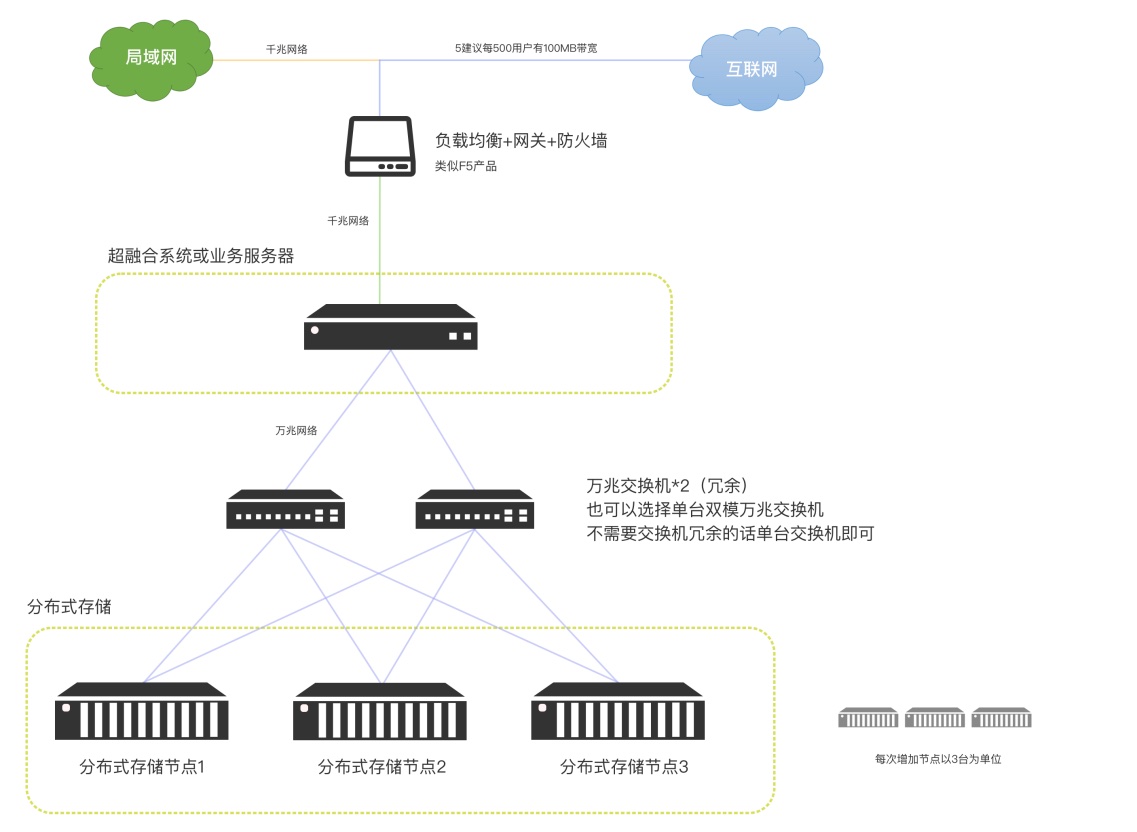
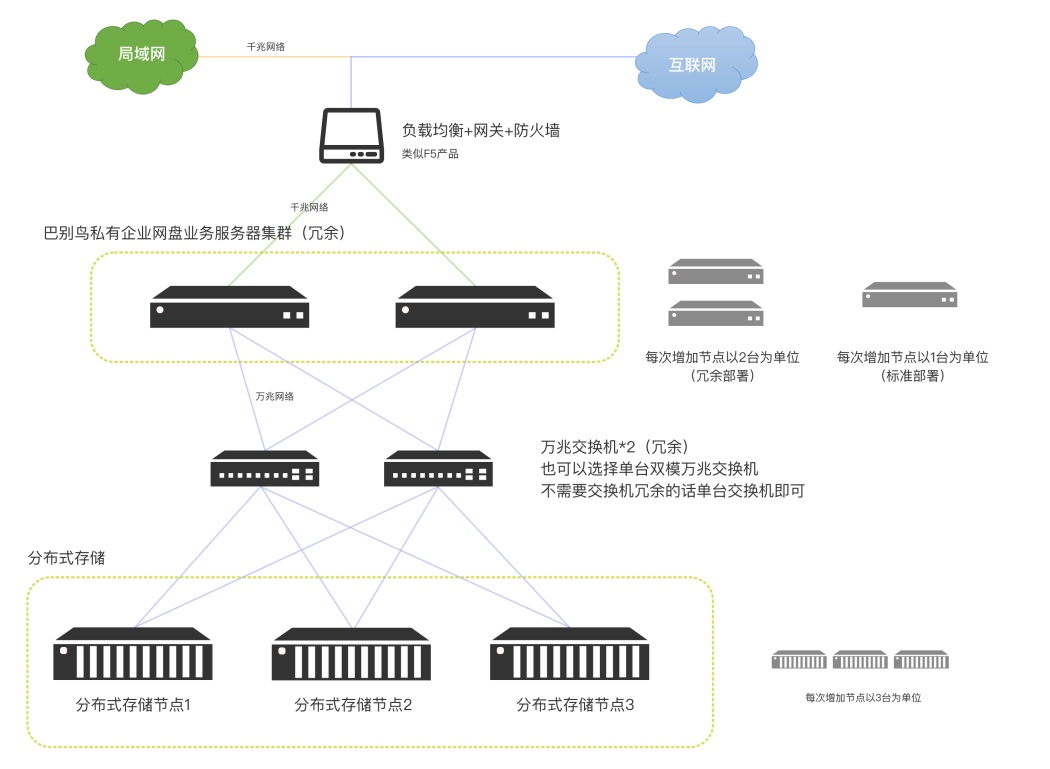
Availability and Disaster Recovery
HA reduces the impact of certain failures; backups support recovery from deletion, corruption or site failure. Neither replaces the other. Plan consistent recovery of database records, file content and required configuration.
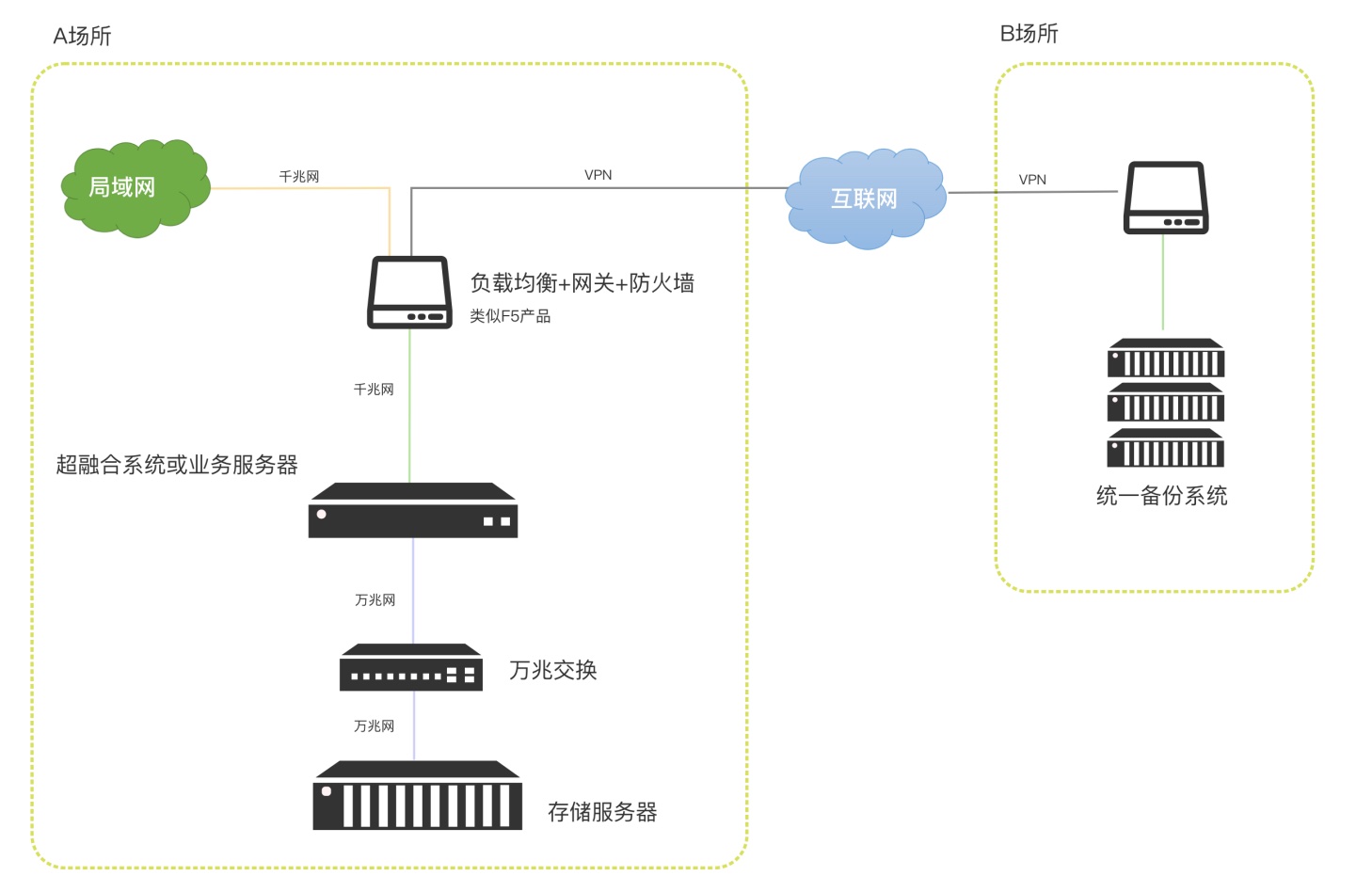
Define RPO, RTO, replication mode, retention and failback procedures. Restoring backups takes time; object-storage replication alone does not make the application and database fail over together. See high availability and backup and recovery.